

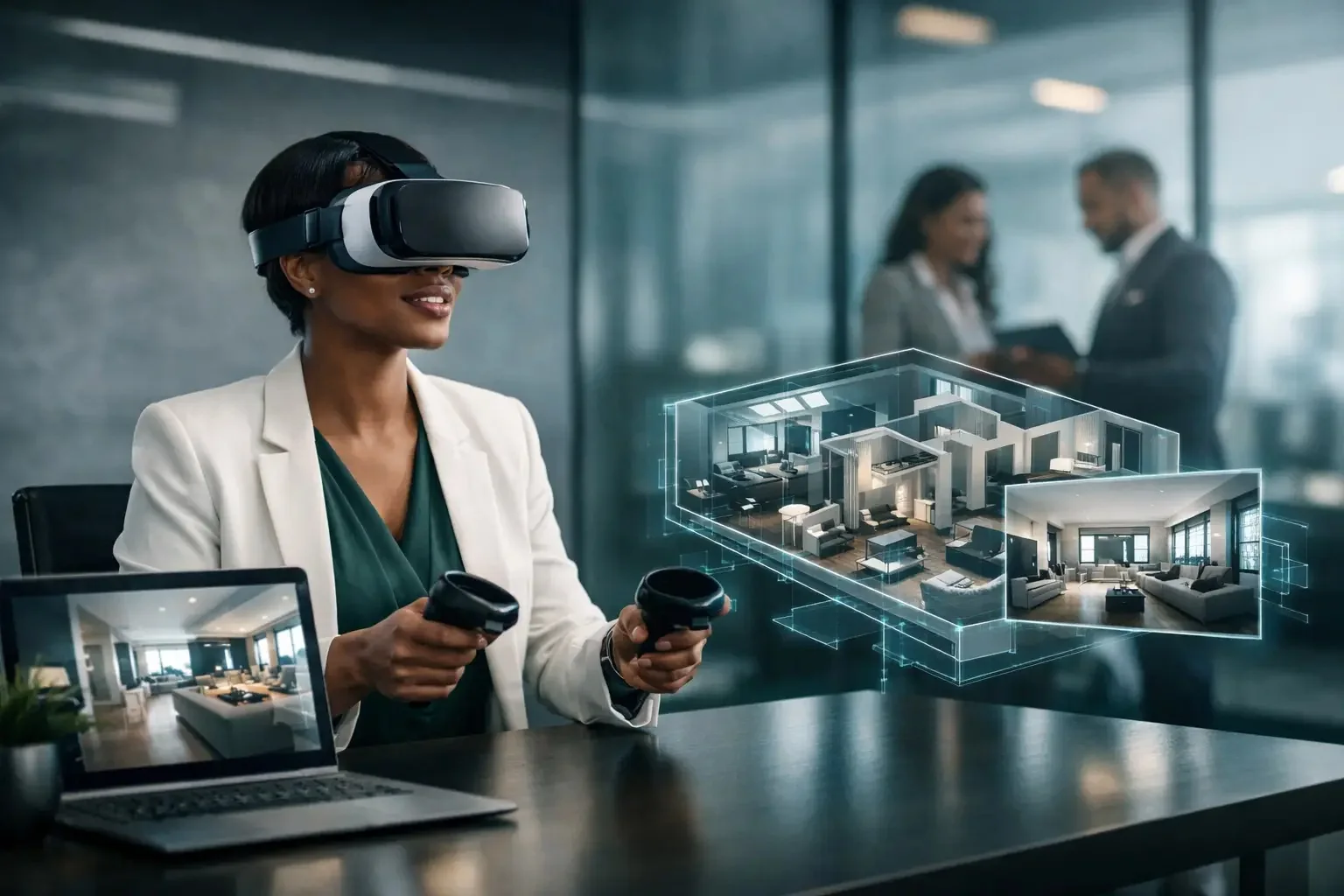
A leasing inquiry can arrive from another city, another country, or between meetings when neither the prospect nor the property team can visit the site. A brochure may create interest, but it rarely answers the questions that determine whether a conversation progresses. Can immersive previews improve leasing? In many cases, yes - not because a virtual walkthrough replaces every physical inspection, but because it gives serious prospects enough credible spatial evidence to take the next step.
For developers, brokers, property owners, and hospitality operators, the commercial question is not whether 3D is impressive. It is whether it reduces friction between initial interest, qualification, viewing, negotiation, and occupancy. A well-produced immersive preview can do exactly that when it is treated as a leasing asset rather than a decorative marketing feature.
How immersive previews improve leasing decisions
An immersive preview turns a static listing into an environment a prospect can inspect on their own terms. Instead of relying on a limited photo set, they can move through reception areas, offices, apartments, retail units, corridors, amenities, parking access, and exterior approaches. Dollhouse views and measured floor plans add context that individual images cannot provide.
That additional context matters because leasing decisions are spatial. A tenant wants to understand how visitors enter, where teams will work, whether a unit receives sufficient natural light, how a service route connects to loading areas, or how one floor relates to another. For hospitality spaces, group-booking coordinators may need to assess event flow, room categories, dining areas, and guest amenities before committing to a site visit.
The result is not necessarily an immediate signed lease. More often, it is a better next interaction. Prospects who request a call or physical tour after exploring a detailed digital environment are more likely to understand the offer, the location, and the constraints of the space. That helps leasing teams spend their time with better-qualified opportunities.
The real value is qualification, not novelty
A standard listing often produces a familiar problem: high inquiry volume, low viewing quality. People ask questions that were already answered in the listing, schedule visits for spaces that do not fit their requirements, or disengage after discovering a layout detail that photos did not reveal.
Immersive previews reduce some of that waste. A prospect can check the practical basics before contacting the team. Is the unit open-plan or partitioned? Is there a dedicated entrance? Does the retail frontage face the expected pedestrian route? Can a regional manager evaluate the office before sending a local representative? Are the meeting rooms, access controls, or staff facilities suitable for operations?
This is especially useful where decision-makers are geographically dispersed. An investor based abroad, a corporate tenant with a regional real estate team, or a diaspora buyer assessing a commercial opportunity may not be able to travel at the start of the process. A high-quality virtual walkthrough creates a credible first inspection and gives internal stakeholders a shared reference point for discussion.
It also makes the leasing team more responsive. Rather than manually resending photos, explaining room adjacencies, or arranging an initial site visit for every inquiry, they can direct prospects to a consistent digital record of the property. The conversation can then focus on lease terms, fit-out, timing, compliance, and operational requirements.
A preview must answer practical questions
Not every 3D tour improves leasing. A poor capture with unclear navigation, weak lighting, missing areas, or no supporting information may create more uncertainty than confidence. The best immersive previews are designed around the questions a prospect needs answered.
For a commercial building, that may include common areas, unit entrances, lift access, washrooms, parking, security points, and views from key windows. For an industrial site, it may include vehicle circulation, loading bays, storage zones, equipment areas, safety routes, and perimeter access. For residential leasing, prospects may need a clear view of kitchens, bathrooms, wardrobes, balconies, compound facilities, and surrounding access.
Interactive hotspots can provide useful detail without overcrowding the screen. They can identify unit sizes, highlight available suites, explain finishes, show amenity hours, or clarify leasing contacts. Virtual staging can help an empty office, apartment, or showroom communicate its potential, provided it is clearly presented as a visualization rather than an existing condition.
Where immersive leasing previews have the strongest impact
Immersive previews are most effective when a property has meaningful visual and operational qualities that are difficult to communicate through still photography alone. Multi-unit developments, business centers, hotels, retail environments, furnished residences, and automotive facilities are strong candidates because prospective customers need to understand flow, scale, and experience.
They are also valuable during pre-leasing and renovation. A developer can document completed areas while construction continues elsewhere, provide an evidence-based update to prospective tenants, and use virtual staging to demonstrate intended use. This does require discipline. Construction-stage walkthroughs should be dated, clearly labeled, and updated as material changes occur. Otherwise, the preview can become a source of confusion or create expectations the finished asset does not meet.
For portfolio owners, the value grows across multiple locations. A standardized digital format allows regional leasing teams to present assets consistently and lets leadership compare space, condition, and tenant-facing presentation without traveling to every site. It becomes part marketing tool, part operational reference.
What immersive previews cannot do alone
A digital walkthrough cannot confirm everything a tenant needs to know. It cannot replace legal due diligence, a technical inspection, lease negotiation, accessibility verification, or a physical visit for a complex operational requirement. It also cannot correct poor property fundamentals. If an asset has weak access, inadequate services, or a layout that does not suit the tenant, better visualization simply makes that clearer sooner.
That is not a failure. Earlier clarity protects both parties from a long sales process built on incomplete information.
Leasing teams should also avoid assuming that every prospect wants the same experience. Some will explore a self-guided tour at night from a mobile device. Others will need a live guided 3D call where a broker can respond to questions, compare units, and explain the surrounding commercial context. A strong leasing process supports both paths.
Building an immersive preview into the leasing workflow
The most effective approach begins before capture. Define the leasing objective: filling a specific unit, marketing a new development, attracting international tenants, supporting hospitality sales, or creating a durable portfolio record. That objective determines which areas to capture, what information should appear as hotspots, and whether floor plans, staging, live calls, or audience analytics are needed.
Next, treat accuracy as a commercial requirement. The environment should reflect the property as it is being marketed. If furniture, finishes, or availability will change, update the experience or disclose the context clearly. LiDAR-supported spatial capture and structured digital documentation can strengthen confidence because they create a more dependable representation of scale and layout.
Then measure engagement alongside inquiry volume. Useful signals include which spaces are viewed most often, where visitors spend time, whether prospects return to the tour, and which calls to action generate qualified conversations. These insights can inform follow-up and reveal what tenants value most. A frequently viewed rooftop terrace, loading area, or conference facility may be a central selling point that the original listing understated.
IMMOBITRON approaches these environments as interactive digital records built for access, communication, and decision-making. For leasing teams, that means the deliverable should be ready for marketing, remote review, stakeholder presentation, and future documentation - not simply published once and forgotten.
A better first viewing changes the whole pipeline
The strongest case for immersive previews is simple: they give the right prospects a more honest, useful first view of a space. That can shorten the path to a serious conversation, reduce low-value site visits, and help remote stakeholders participate before travel is justified.
The properties that benefit most are not always the most expensive or visually dramatic. They are the ones where clear spatial understanding removes a real decision barrier. When a prospective tenant can see how a place works, not just how it photographs, the leasing conversation starts at a more productive point.